
USCIS Could Require Online Immigration Filings: These Forms May Become Mandatory for Applicants

A new rule allows USCIS to require certain immigration applications to be filed online, but the agency must provide at least 60 days’ notice identifying which forms will be affected.
U.S. Citizenship and Immigration Services (USCIS) will be able to require certain immigration filings to be submitted exclusively online following a new rule issued by the Department of Homeland Security (DHS), according to Univision.
- Why it matters: Applications involving citizenship, work permits, TPS, DACA, and family petitions are among those that could transition to mandatory online filing, although USCIS has yet to announce which ones will be affected first.
USCIS Must Provide Notice Before Making Online Immigration Filings Mandatory
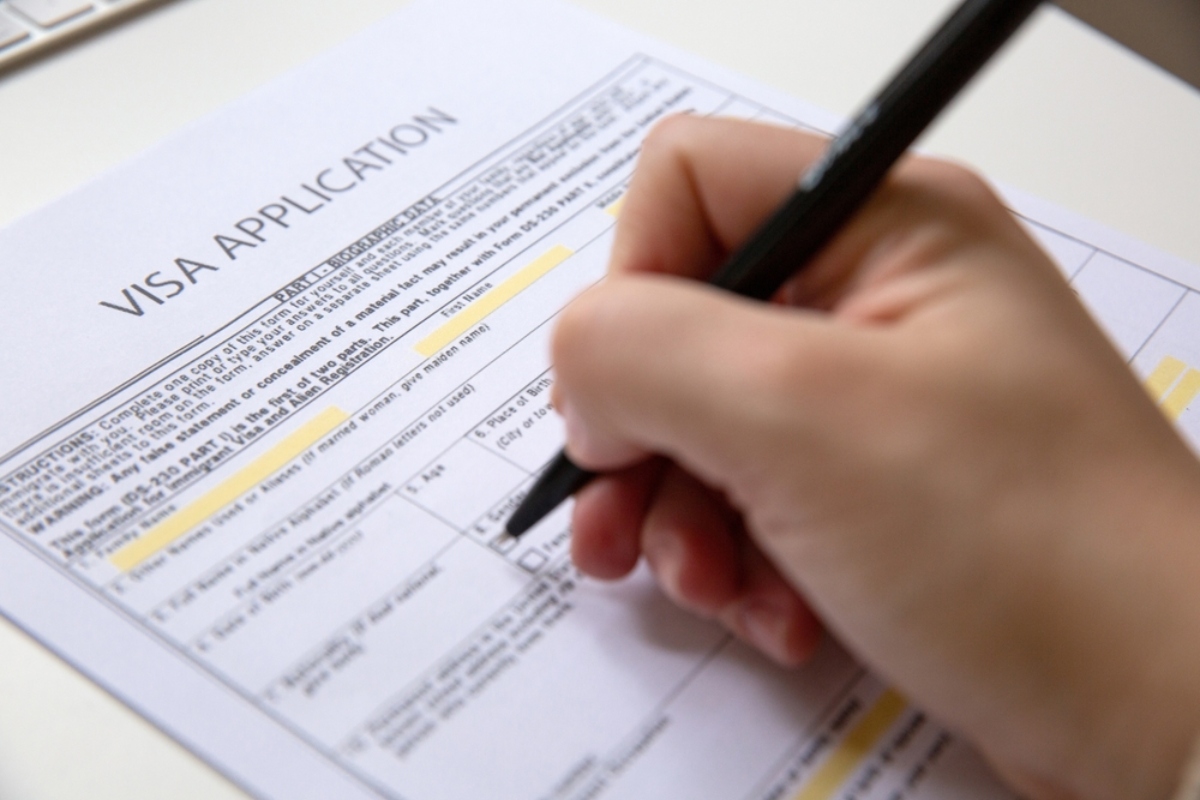
The new rule does not mean that all immigrants must immediately stop mailing paper forms.
USCIS will have to determine individually which applications will be subject to mandatory online filing. The agency will also have to notify the public of the change at least 60 days in advance.
YOU MAY ALSO BE INTERESTED: New DOJ Ruling Puts U.S. Return at Risk for Immigrants With Travel Permits
- The date: According to Univision, the first forms subject to the new requirement could be announced around mid-October 2026.
- The change: The measure seeks to gradually reduce paperwork sent through the mail and move toward electronic payment of immigration filing fees.
The agency maintains that receiving more applications digitally could also speed up processing and make it easier to identify incomplete forms or potential cases of fraud.
Green Card, Citizenship, and Work Permit Forms Could Be Affected
The list of USCIS online immigration forms that could become subject to mandatory electronic filing includes applications frequently used by immigrants in the United States.
Among them are Form I-90, used to replace a Green Card; Form N-400, used to apply for naturalization; and Form I-130, used to petition for certain foreign relatives.
- Other forms: I-539 for an extension or change of status; I-765 for work permits in certain categories; and I-131 for certain travel documents.
- Also included: I-821 for TPS, I-821D for DACA renewal, I-134A related to humanitarian parole programs, and N-565, N-600, and N-600K for certain citizenship documents.
The fact that these forms are being considered does not mean applicants are already required to file them exclusively online. USCIS must specifically announce which forms will become subject to the requirement.
Some Immigration Forms Would Remain Exempt for Now
Not every immigration process can immediately transition to the new system.
Some forms still do not have an online filing option and, for that reason, would remain outside the new requirement for now.
- Among the exceptions: I-485 for adjustment of status and permanent residence, I-751, I-864, I-360, I-918 for U visas, and certain I-589 asylum applications.
- Another exception: USCIS is considering accommodations for people who can demonstrate an “exceptional hardship” that prevents them from completing the process online.
Immigrants Will Need to Monitor Upcoming USCIS Announcements
For applicants, the key will be to check the instructions for each form before submitting it.
USCIS said it will publish details on its website identifying which immigration filings must be completed online and will be required to honor the 60-day advance notice period.
Until those announcements are published, the new rule gives USCIS the authority to impose mandatory digital filing, but it does not automatically turn every form currently available online into an electronic-only application.
- What’s next: The first announcements could arrive around mid-October, according to information reported by Univisión.
¿Te gustó este artículo? ¡Compártelo!
¡No te pierdas las noticias!
Suscríbete y recibe lo más importante directamente en tu correo
Artículos relacionados
Recomendado por IA
Aseguran que USCIS exige nuevo requisito para solicitar la Green Card

USCIS permite la presentación en línea del Formulario I-131 para ciertos inmigrantes
USCIS lanza formulario en línea para que usuarios soliciten citas en persona

¡Atención! USCIS cambia requisitos para la Green Card

USCIS anuncia importante cambio para quienes pidan los papeles

Comentarios 0
Sé el primero en comentar