
Tropical Storm: Key Guide to Protect Your Life Before, During, and After Impact

- Key Tropical Storm Safety Guide
- Prepare an Emergency Kit
- Follow Official Orders
Every year, before the official start of the season — which begins May 15 in the North Pacific and June 1 in the Atlantic and Caribbean, and ends November 30 — authorities stress the importance of planning ahead.
Storms and hurricanes do not only strike coastal areas; their effects can be felt hundreds of miles inland, so every family should create a clear emergency plan and share it with everyone at home.
That plan should include contact numbers posted visibly at home and saved on cellphones, previously identified evacuation routes, and the location of nearby shelters in case residents are ordered to leave their home.
It is also essential to prepare a kit with water, nonperishable food, medications, flashlights with extra batteries, important documents, and personal items, as well as plan safe options for pets in case of evacuation.
Understanding Warnings and Stocking Up in Time

Knowing the difference between a hurricane watch and a hurricane warning can make the difference between acting early and reacting too late to danger.
A watch means severe conditions are possible within the next 48 hours, while a warning means hurricane-force winds are expected in about 36 hours, requiring immediate action.
YOU MAY BE INTERESTED IN: Tropical Storm Boris Forms and Threatens Mexico’s Pacific Coast: Heavy Rain and Landslide Risk
When either of these notices is issued, it is recommended to gather enough supplies for several days, since water and electricity service may be interrupted and roads may become blocked or flooded.
Stocking up in advance reduces the need for last-minute trips and allows families to focus on protecting themselves instead of searching for supplies when conditions are already dangerous.
How to Secure Your Home and Vehicle
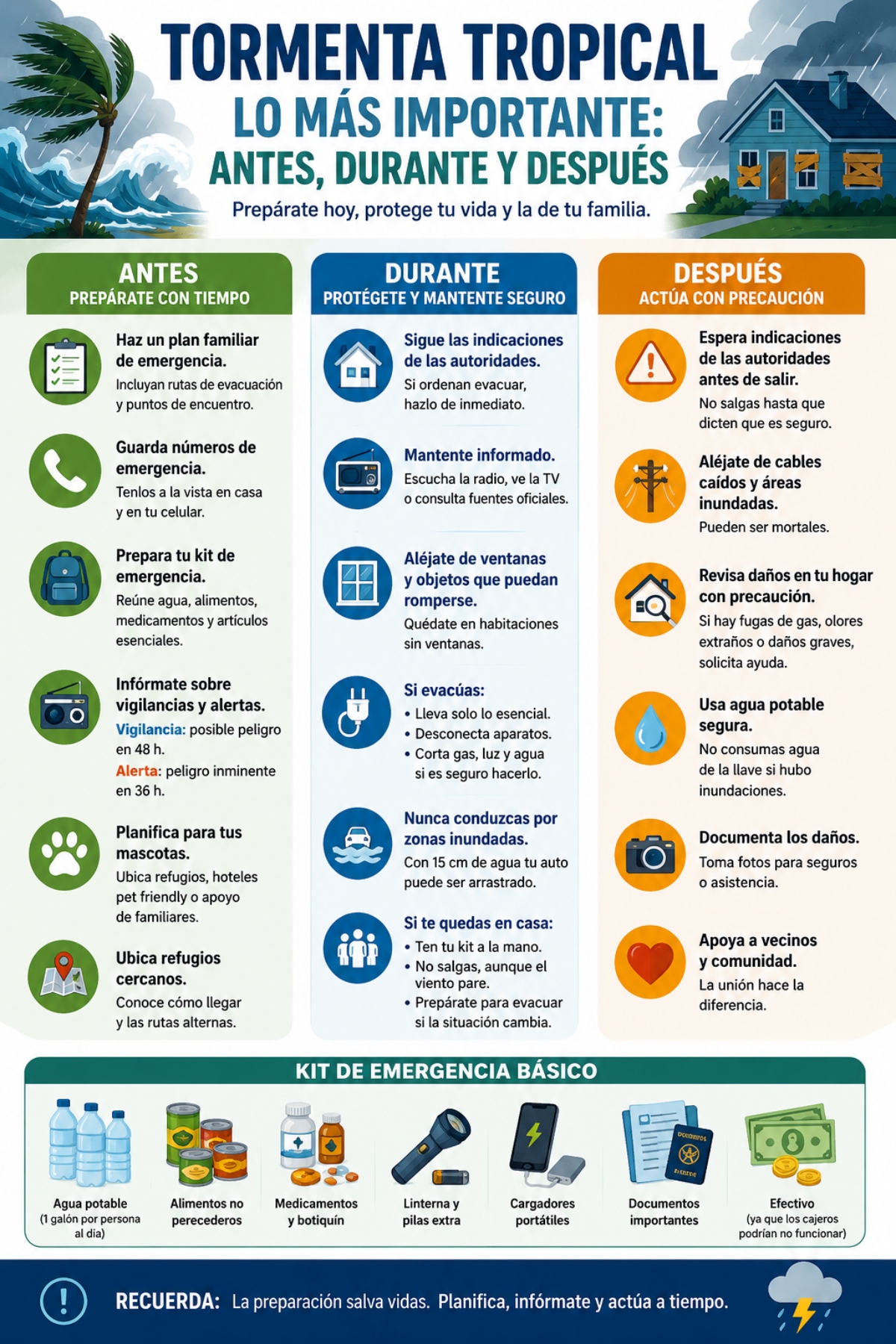
Before the storm arrives, the area around the home should be cleared of objects that could become projectiles because of the wind, such as patio furniture, bicycles, or gas tanks.
Windows and doors should be protected with shutters or wooden panels, and if there is a risk of flooding or downed power lines, it is wise to disconnect electricity to avoid accidents.
Filling containers with drinking water and checking the battery in the carbon monoxide detector are essential steps, especially if generators or alternative power sources will be used.
The vehicle also requires preparation: a full gas tank, an emergency kit on board, and, if possible, parking it in a covered place to reduce damage.
Evacuating or Staying Home: Critical Decisions
When authorities order an evacuation, the recommendation is clear: do not ignore the instruction, even if the home seems sturdy, because personal safety is the priority.
In case of evacuation, take only the essentials — identification, medications, phone, and cash — disconnect basic services if there is time, and follow official routes, avoiding driving through flooded areas.
If the order is to stay home, the emergency kit should be within reach and everyone should remain informed through radio, television, or reliable digital media.
During the storm, it is vital to stay away from windows and not go outside even if the wind seems to calm down, since it may be the temporary passage of the storm’s eye and conditions could worsen quickly.
Preparation does not end when the wind stops; checking for damage carefully, avoiding downed power lines, and following official instructions are essential tropical storm safety steps to reduce risks after the storm passes and support a safe recovery, the CDC website noted.
¿Te gustó este artículo? ¡Compártelo!
¡No te pierdas las noticias!
Suscríbete y recibe lo más importante directamente en tu correo
Artículos relacionados
Recomendado por IA
¿Qué hacer antes, durante y después de un huracán?
Cómo protegerse ante un terremoto: Consejos y estrategias

¿Qué hacer si alguien colapsa frente a ti?

Alerta tormenta: Cómo cuidarte y cuidar a los tuyos

Comentarios 0
Sé el primero en comentar