
Stop ICE Expands Across the U.S.: How the Network Warning Communities About Immigration Operations Works

- Stop ICE Raid Alert expands across the U.S.
- Operates through text messages
- Reports have different verification levels
A network created by an American programmer is gaining nationwide reach by sending text-message alerts about possible immigration enforcement operations in communities across the United States.
Stop ICE Raid Alert, created by Sherman Austin, allows people to report and receive alerts about activity attributed to ICE, although its own system distinguishes between confirmed information and unverified reports.
The platform gained momentum during an increase in federal operations in Los Angeles and, according to Austin, later experienced similar growth in cities such as Chicago and Minneapolis.
The creator says his goal is to provide communities with timely information: “It was designed specifically to keep them safe and protect our community.”
Stop ICE Raid Alert Grows as Immigration Operations Increase
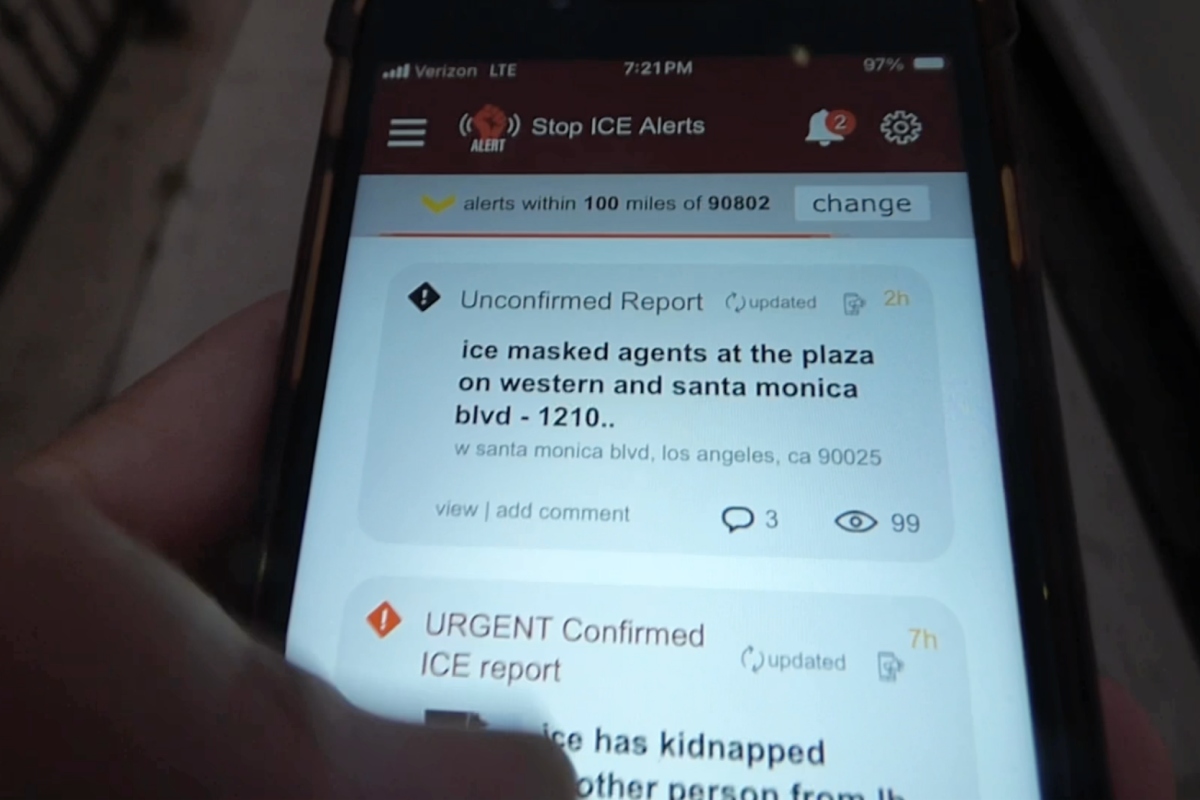
- Why it matters: Alerts can quickly reach residents in a particular area, but each user should consider the level of verification before acting on a report.
Austin says the idea originated in 2017, during the first Trump administration, when he developed a prototype that ultimately did not become an operational tool.
YOU MAY ALSO BE INTERESTED IN: USCIS Could Require Online Immigration Filings: These Forms May Become Mandatory for Applicants
The project was revived in February 2025. “I thought about creating an alert system that would notify people when ICE was present in their community,” he explained.
One key feature is that users do not need to download an app or own an advanced smartphone: the system is designed to work directly through text messages.
How Stop ICE Raid Alert Works and Handles Reports
- The process: A person can report possible ICE activity by providing a location and description, or by texting the word “report” to 877-322-2299 and following the instructions.
After receiving the information, the system analyzes it and assigns a score. Information considered insufficient or inconsistent may remain pending until it is reviewed by a local moderator.
In addition, Stop ICE Raid Alert categorizes its alerts as confirmed activity, sightings, reports that have not yet been confirmed and past incidents, allowing users to select which categories they want to receive.
The key figure: Austin says that during the increase in federal activity in Los Angeles, 60,000 people signed up within two days, followed by another 60,000 registrations.
ICE Alerts Appear in Parking Lots and on Streets
According to Austin, users have reported arrests connected to traffic stops, gas stations, Home Depot and Walmart parking lots, as well as appointments with immigration authorities.
He also mentions alerts involving agents at bus stops, on streets and in other public spaces, although these observations come from Austin and participants in his platform.
This means the reports do not automatically constitute independent confirmation that ICE is conducting an operation at the location identified in an alert.
Austin says some users have avoided certain locations after receiving warnings, while community groups use reports to travel to those areas and verify what is happening.
View this post on Instagram
Stop ICE Faces Debate Over Informing Communities vs. Interfering
Austin maintains that the First Amendment protects people’s right to photograph, record and document law enforcement officers while they are carrying out activities in public spaces.
However, he acknowledges that there is a line between documenting government activity and taking actions that could be considered interference with an operation involving federal agents.
Receiving or sharing an alert also does not guarantee that its content is accurate, nor does it authorize anyone to approach, confront or physically interfere with agents during an enforcement action.
- What users can do: Users can review an alert’s confirmation level, avoid assuming that every report is accurate and refrain from interfering with any federal operation.
The Story Behind the Nationwide Stop ICE Network
Austin says his interest in the issue began after he was incarcerated in a prison that housed an immigration detention center, where he says he witnessed conditions faced by detainees.
Years later, he revived the project amid growing concern over immigration enforcement operations and transformed his 2017 proposal into an active platform.
“There is power in speaking up and letting them know that we are the majority in the community and that we are not going to tolerate this,” Austin said about his initiative.
He now says he faces threats and attempts to disrupt the platform, which relies primarily on community donations to fund its infrastructure and keep the service available.
The Future of Stop ICE Raid Alert Amid Immigration Operations
The expansion of Stop ICE Raid Alert shows how text messaging is being used to rapidly distribute immigration-related information without relying exclusively on apps or social media.
Austin says growth is particularly strong when ICE or Border Patrol activity increases, while new users subsequently share the service with relatives and acquaintances.
The model also presents a challenge: allowing user-generated information to circulate quickly without turning preliminary reports or sightings into confirmed facts.
As immigration enforcement operations continue, these networks will face a central question: how to keep communities informed in real time without losing sight of verification and legal boundaries, according to Univision and the official Stop ICE website. The project has also requested financial support through GoFundMe.
¿Te gustó este artículo? ¡Compártelo!
¡No te pierdas las noticias!
Suscríbete y recibe lo más importante directamente en tu correo
Artículos relacionados
Recomendado por IA
Revelan expansión masiva de centros de detención de ICE en EE.UU

ICE presiona a inmigrantes a renunciar a su Green Card

ICE intensifica redadas con tácticas militares: protestas y miedo se extienden en EE.UU.

Protestas contra ICE se extienden más allá de Los Ángeles: tensión en ciudades clave de EE.UU.

Consejos para Inmigrantes que tienen la Green Card ante Aumento de Operativos de ICE

Comentarios 0
Sé el primero en comentar