
Census Identifies 24,000 Noncitizen Votes in 2020 and Trump Declares: “I WON!”

The Census Bureau analysis identified thousands of voting records linked to people who were not U.S. citizens when they voted in 2020, but more than 32 million records still need to be reviewed, and the noncitizen votes study does not reveal which candidate they supported.
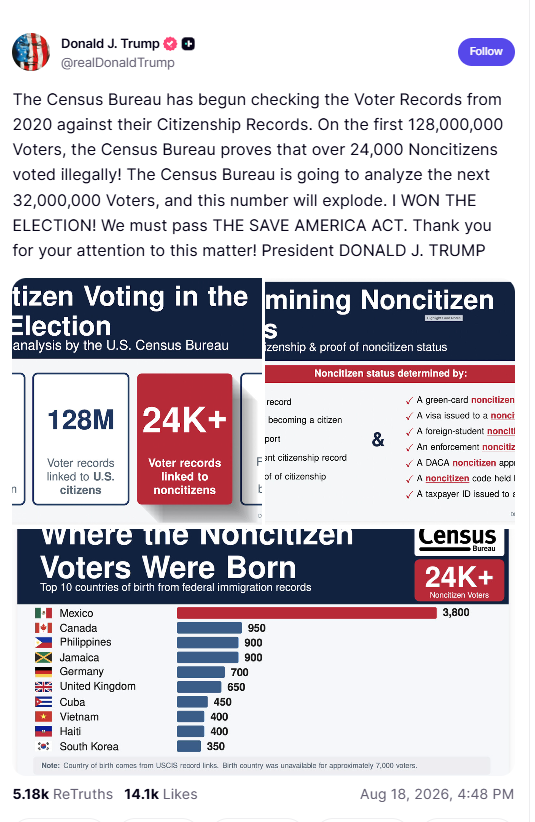
The U.S. Census Bureau identified with “high confidence” more than 24,000 records of people who voted in the 2020 election and were not U.S. citizens at the time, according to an initial analysis released in August.
President Donald Trump reacted to the finding by declaring: “I WON THE ELECTION!” although the document does not reach that conclusion.
- Why it matters: The finding provides new data for the debate over noncitizen votes in 2020, but it does not establish whom those individuals voted for or determine that those ballots changed the outcome of the presidential election.
More Than 32 Million 2020 Voting Records Have Yet to Be Analyzed
Nearly 160 million people voted in the November 3, 2020, general election.
The analysis was able to determine with high confidence that more than 128 million records belonged to U.S. citizens.
Another 24,000 were linked to administrative records indicating that those individuals were noncitizens at the time they voted. However, the work is far from complete.
- The key figure: More than 32 million voting records still need to be analyzed by the Census Bureau.
Trump said the number of noncitizens who voted “will skyrocket” as the review progresses.
That is a prediction by the president; the Census Bureau does not make that projection in its report.
Report Does Not Say Who Received the Noncitizen Votes in 2020
The limitations of the analysis are important. The document identifies voting records and compares them with administrative citizenship information, but it does not indicate which candidate received those votes.
Therefore, the 24,000 identified cases do not make it possible to conclude that Trump would have won the 2020 election.
- The difference: Trump interprets the finding as evidence that he won; the Census Bureau analysis does not determine the winner or attribute those votes to any party or candidate.
The study used a commercial DataClear file containing voting records and cross-referenced it with federal information from agencies including USCIS, ICE, the State Department and the Social Security Administration.
The system also searched for evidence of citizenship to avoid classifying as noncitizens immigrants who had become naturalized U.S. citizens before voting.
Florida Ranks Third Among States With the Most Cases

California leads the initial analysis with about 4,300 records, followed by Texas with approximately 2,500.
Florida ranks third with nearly 1,800, while New York follows with around 1,700. The figures were rounded by the Census Bureau to protect data confidentiality.
- By the numbers: California, Texas and Florida account for approximately 8,600 of the cases identified in the initial analysis.
Findings Come Ahead of November Elections
The results come as Trump pushes for tighter citizenship verification measures ahead of the November elections.
In March, the president signed an executive order directing the creation of state citizenship lists using federal records and requiring that information to be updated ahead of federal elections. The administration says the effort is intended to prevent ineligible individuals from voting.
- What’s next: The Census Bureau still needs to review more than 32 million records, meaning the 24,000 cases involving noncitizen votes in 2020 represent an initial finding rather than the final conclusion of the analysis.
The study therefore opens a new discussion about noncitizen participation in the 2020 election, but its scope remains limited: It identifies thousands of records requiring further scrutiny without demonstrating which candidate benefited from them or whether they altered the outcome of the presidential election.
YOU MAY ALSO BE INTERESTED IN: Why Did the DOJ Monitor the Elections in Miami-Dade?
SOURCE: Census.Gov
¿Te gustó este artículo? ¡Compártelo!
¡No te pierdas las noticias!
Suscríbete y recibe lo más importante directamente en tu correo
Artículos relacionados
Recomendado por IA
Trump insiste en incluir la pregunta de ciudadanía en el censo del 2020
Trump sale a hablar y se declara ganador ante miles en Florida

Trump pide acelerar decisión para excluir a los indocumentados del Censo

Trump gana en Nevada y se lleva seis votos más en el Colegio Electoral
ÚLTIMA HORA: Trump descarta incluir la pregunta sobre ciudadanía en el censo de 2020

Comentarios 0
Sé el primero en comentar