
Unnecessary Spending? ICE Buys Thousands of Vehicles Agents Can’t Use

- ICE buys unusable vehicles
- Marked SUVs raise operational concerns
- Vehicles stored at agency facilities
According to a report by the Washington Examiner, a large order of vehicles for U.S. Immigration and Customs Enforcement has sparked controversy within the U.S. Department of Homeland Security.
Thousands of pickup trucks and SUVs purchased for ICE reportedly cannot be used during operations to arrest undocumented immigrants.
According to three sources cited by the publication, a former official in the administration of Donald Trump authorized the purchase of thousands of vehicles that were supposed to be clearly marked with the ICE name and logo.
The problem is that ICE agents rarely use marked vehicles during operations, which has left many of the newly purchased vehicles unusable for their intended purpose.
Senior ICE officials are now quietly searching for ways to modify part of the order and store many of the vehicles already delivered at agency facilities across the country.
“ICE has never had marked vehicles,” said one person familiar with the purchases.
“When you talk to people, they say, ‘We don’t want to use them, we can’t,’” the source added.
ICE marked vehicles raise operational concerns and spark controversy
During the past year, attacks against ICE personnel reportedly increased by 8,000%, according to data from the Department of Homeland Security.
Because of these security concerns, federal agents often conceal their identities while working in public.
They have also adopted other precautions to avoid being identified, such as switching license plates on rental vehicles to prevent activists from tracking cars suspected of belonging to ICE.
You may also like: American Man Explodes Against Trump While Tearing Off “Trump 2024” Sticker From His Car
Despite these precautions, former ICE deputy director Madison Sheahan ordered a large purchase of vehicles clearly marked with the agency’s logo.
The decision contradicted the usual practices of agents who conduct enforcement operations.
“If leadership had been consulted — meaning the executive assistant directors — about whether they needed marked vehicles, people who have done this work would have said, ‘We don’t need marked vehicles because they won’t be used,’” one source said.
DHS publicly presented the new ICE marked vehicles
We will have our country back.https://t.co/nZkBEj4evQ pic.twitter.com/gYKzwMJV52
— Homeland Security (@DHSgov) August 14, 2025
Last August, the Department of Homeland Security and the White House shared images on social media showing newly equipped pickup trucks and SUVs for the agency.
It was reportedly the first time since ICE was created in 2003 that the agency purchased clearly marked vehicles.
The vehicles were designed in dark navy blue with a horizontal red stripe on each side.
The sides display the ICE name and logo in gold lettering.
On the back appears the motto “Defend the Homeland.”
At the time, DHS stated that the vehicles did not represent a safety risk for agents.
“The safety of our brave men and women is, and always has been, our priority, and suggestions that law enforcement vehicles would endanger that are simply not the case,” the department said.
Multimillion-dollar purchase raises questions
Iced out. 🥶 pic.twitter.com/xhexqgmbzS
— Homeland Security (@DHSgov) August 14, 2025
The legislative project known as the One Big, Beautiful Bill allocated $170 billion over four years for border security and immigration enforcement.
Within that funding, $29.5 billion was assigned to ICE for various expenses.
These included recruitment initiatives, hiring, technology upgrades, facility improvements and modernization of the agency’s vehicle fleet.
Last November, the agency announced it would spend $2.25 million to purchase 25 Chevrolet Tahoe vehicles with the new ICE logo.
These vehicles were intended for recruitment activities as the agency worked toward hiring 10,000 new deportation officers.
The contract was awarded to Rick Hendrick, owner of Hendrick Motorsports.
An additional $174,000 to $230,000 was spent on three companies to apply the agency’s new vehicle graphics.
Vehicles stored while ICE reviews the order
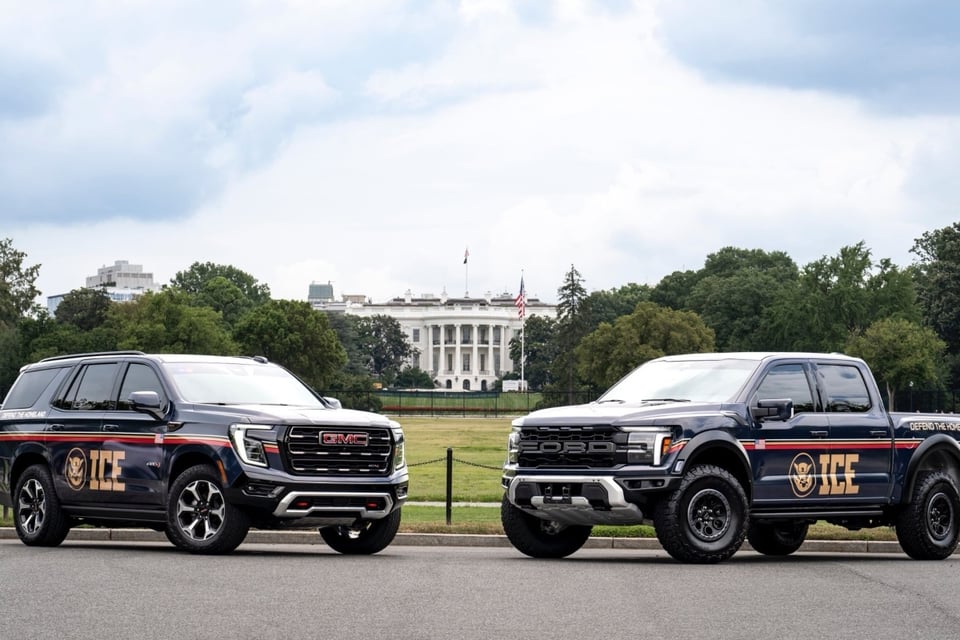 According to sources familiar with the situation, the total order included around 2,500 customized vehicles.
Many of them are now being stored because agents cannot use them during community operations.
Marked vehicles alert people to the presence of federal agents, which can interfere with enforcement activities.
“It’s ridiculous because they don’t want to advertise what they do,” one source said.
“We just hide them in a parking lot because we don’t want to drive them. Who wants to drive the marked vehicles?” the person added.
In one California city, for example, about 25 vehicles that had been delivered were moved to a nearby detention center and remain stored there.
Another source said some vehicles may still be used in specific situations.
For example, they could be used when ICE transports detainees who are already in custody at local or state jails.
After Sheahan left the agency earlier this year, ICE headquarters began reviewing the order for the remaining vehicles.
The goal is to ensure that future vehicles are delivered without the visible ICE logo.
¿Te gustó este artículo? ¡Compártelo!
¡No te pierdas las noticias!
Suscríbete y recibe lo más importante directamente en tu correo
Artículos relacionados
Recomendado por IA
ICE presiona a inmigrantes a renunciar a su Green Card

Se descubre que ICE gastó $17 millones en habitaciones de hotel que nunca usaron los inmigrantes

ICE libera a miles de inmigrantes sin siquiera tener cita en Corte

Condado de DeKalb: Cinco camionetas repletas de indocumentados intervenidas por ICE
Redadas de ICE: Aseguran que en Atlanta alquilaron minivans de Enterprise

Comentarios 0
Sé el primero en comentar