
3 Passengers Evacuated Over Hantavirus on Isolated Cruise Ship: How the Outbreak Putting the World on Alert Is Evolving

- Medical evacuations linked to hantavirus outbreak
- Andes strain raises concerns among authorities
- Isolated cruise ship creates growing tension
The hantavirus outbreak aboard the MV Hondius cruise ship continues to escalate with new confirmed cases in Europe, medical evacuations, and political tensions over the vessel’s destination.
What began as an isolated health alert has now become an international incident keeping nearly 150 people under strict measures at sea.
- Why it matters: Confirmation of the Andes strain — a rare variant capable of human-to-human transmission — has increased concern, although authorities insist the overall risk to the general public remains low.
Medical evacuations and new infections expand the scope of the hantavirus outbreak
Three passengers were evacuated from the cruise ship on Wednesday, two of them suffering acute symptoms.
Health authorities have confirmed at least nine suspected or confirmed cases, including three deaths.
In Switzerland, a man who had traveled aboard the ship tested positive, although the government clarified that he does not represent a threat to the general population.
The World Health Organization (WHO) stated that the patient went to the hospital after being contacted by the cruise operator, allowing monitoring protocols to be activated.
Andes strain: a rare variant changing the situation
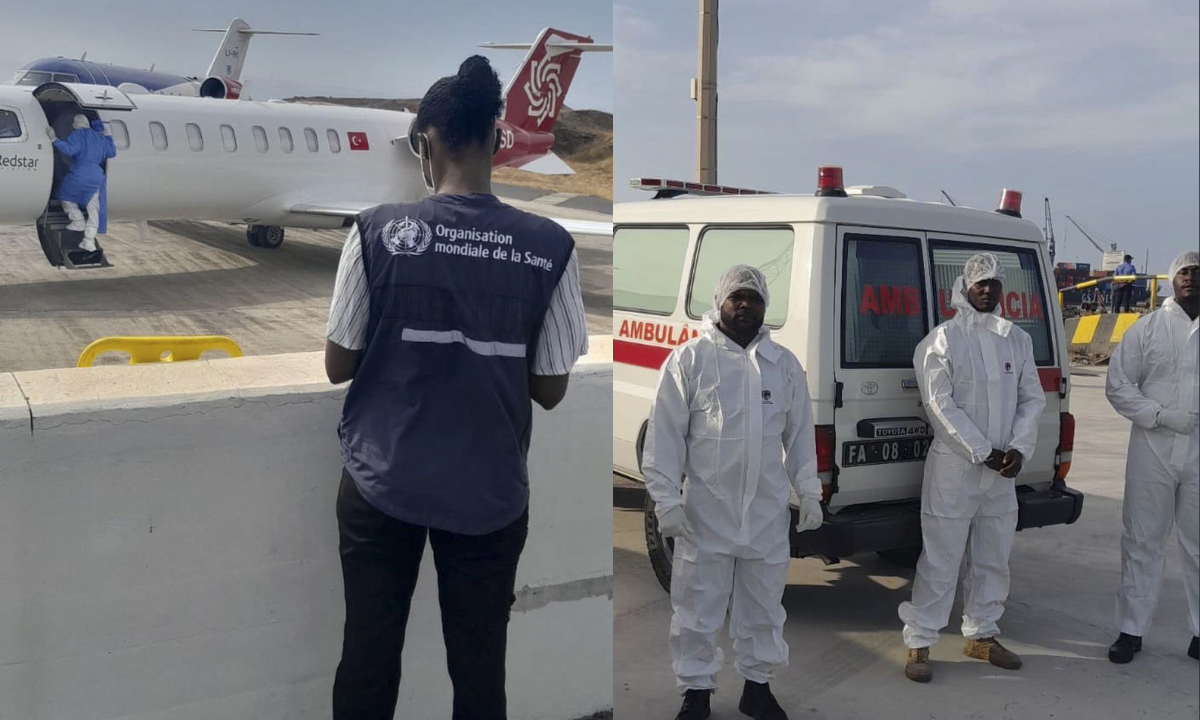
Authorities confirmed that the outbreak corresponds to the Andes strain, originally from South America and known for its ability to spread between people under specific conditions.
Epidemiologist Maria Van Kerkhove explained clearly:
“This virus is only transmitted from person to person through close contact, such as sharing a bed or food.”
What is hantavirus, how does it spread, and why is it concerning?
Hantavirus is a potentially deadly viral disease that, in most cases, spreads through contact with fluids or waste from infected rodents.
In this outbreak, the Andes strain introduces an additional risk factor by allowing limited human-to-human transmission.
- Main transmission: contact with urine, feces, or saliva from infected rodents.
- Exceptional transmission: close contact between people (Andes strain only).
- General risk: low for the public if there is no close contact.
Unlike respiratory viruses such as the flu, it does not spread easily in open spaces or through casual contact.
Hantavirus symptoms and what to do if infection is suspected
The disease can progress rapidly and become severe, making symptom recognition critical.
- Initial symptoms: fever, intense fatigue, muscle pain.
- Possible progression: respiratory difficulty, pulmonary complications.
- Risk level: can be fatal without prompt medical care.
If infection is suspected:
- Seek immediate medical attention.
- Avoid close contact with other people.
- Follow strict public health guidance.
Currently, there is no specific treatment, making early detection essential.
Political clash over the cruise ship’s destination in Spain
The MV Hondius cruise ship remains off Cape Verde while Spain faces an internal dispute over allowing it to arrive in the Canary Islands.
Regional president Fernando Clavijo strongly rejected the decision:
“This decision is not based on any technical criteria, nor is there sufficient information to reassure the public or guarantee their safety.”
He also criticized the lack of coordination:
“The Canary Islands always act responsibly, but they cannot accept decisions made behind the backs of their institutions and without sufficient information for the public.”
Spanish government maintains plan despite local opposition
Despite criticism, the central government confirmed that the ship will be received in the Canary Islands for a full health evaluation and possible passenger repatriation.
Authorities announced that a joint medical evaluation and evacuation system will be implemented in coordination with international organizations.
MV Hondius cruise ship passengers confined under strict health measures
Around 150 people remain aboard the cruise ship under strict protocols.
- They remain in their cabins most of the time.
- They are under constant symptom monitoring.
- They receive limited medical support while awaiting a final destination.
From the WHO, its director reiterated:
“At this stage, the overall risk to public health remains low.”
You May Also Be Interested In: Hantavirus outbreak cruise ship: what you should know about the deadly virus and how to protect yourself.
What comes next: uncertainty and prolonged monitoring
The future of the cruise ship remains unresolved as health authorities continue monitoring both passengers and those who have already disembarked.
If quarantine becomes necessary, it could extend up to eight weeks due to the virus’s incubation period, one of the longest among infectious diseases.
For now, the priority is to contain the outbreak, prevent further infections, and ensure a safe disembarkation amid a crisis combining public health concerns, international logistics, and political pressure.
SOURCE: BBC / NBC News / WHO
¿Te gustó este artículo? ¡Compártelo!
¡No te pierdas las noticias!
Suscríbete y recibe lo más importante directamente en tu correo
Artículos relacionados
Recomendado por IA
En medio de crisis por coronavirus reportan un muerto por hantavirus en China y se prenden las alertas

Entre la crisis por el coronavirus, ahora revelan que NASA anuncia de seis asteroides que pasarán cerca de la Tierra

Lanzan alerta de viaje por coronavirus previo al Memorial Day

El gobierno de EEUU lanzó advertencia de viaje a Haití tras secuestro de una madre y su hija

Harry y Meghan exigen ‘empatía y amabilidad’ ante el coronavirus, mientras el Príncipe Alberto de Mónaco da positivo

Comentarios 0
Sé el primero en comentar