
Uganda Takes Drastic Measure Amid Ebola Expansion in Africa

- Uganda Closed the Border
- Ebola Worries WHO
- U.S. Strengthens Controls
Uganda ordered the closure of its border with the Democratic Republic of Congo on Wednesday due to the increase in suspected Ebola cases linked to a rare type of the virus known as Bundibugyo.
The decision reflects growing fear in East Africa over the spread of a rare Ebola variant for which there are no approved vaccines or medications.
The measure also contradicts recommendations from the World Health Organization, or WHO, which has warned about the risks of closing borders during epidemic outbreaks.
Ugandan authorities confirmed seven Ebola cases in the country, including one death.
According to data compiled by the U.S. Centers for Disease Control and Prevention, or CDC, and the WHO, Congo has already recorded 121 confirmed cases and 17 confirmed deaths.
In addition, there are at least 1,077 suspected cases and 246 suspected deaths linked to the disease.
Uganda Tightens Border Controls
According to CBS, the decision to close the border was made by a Ugandan health task force.
Authorities explained that health workers in the country were exposed to the virus after treating Congolese patients who crossed the border before the outbreak was officially declared on May 15.
Dr. Diana Atwine of Uganda’s Ministry of Health said border crossings will only be allowed in emergency cases.
Among the exceptions are situations related to epidemic outbreaks, transport of goods, and security reasons.
Anyone entering from Congo under emergency circumstances must complete a mandatory 21-day isolation period.
YOU MAY BE INTERESTED IN: Ebola Outbreak Worsens in Central Africa: Death Toll Rises and Sparks International Alert
Contact tracing and isolation are considered essential to containing the spread of the Ebola outbreak in Uganda.
The disease usually appears as hemorrhagic fever.
The virus spreads through close contact with bodily fluids from infected or deceased people.
Experts say health workers and family members caring for patients face the highest risk of infection.
WHO Warns About Risks of Border Closure
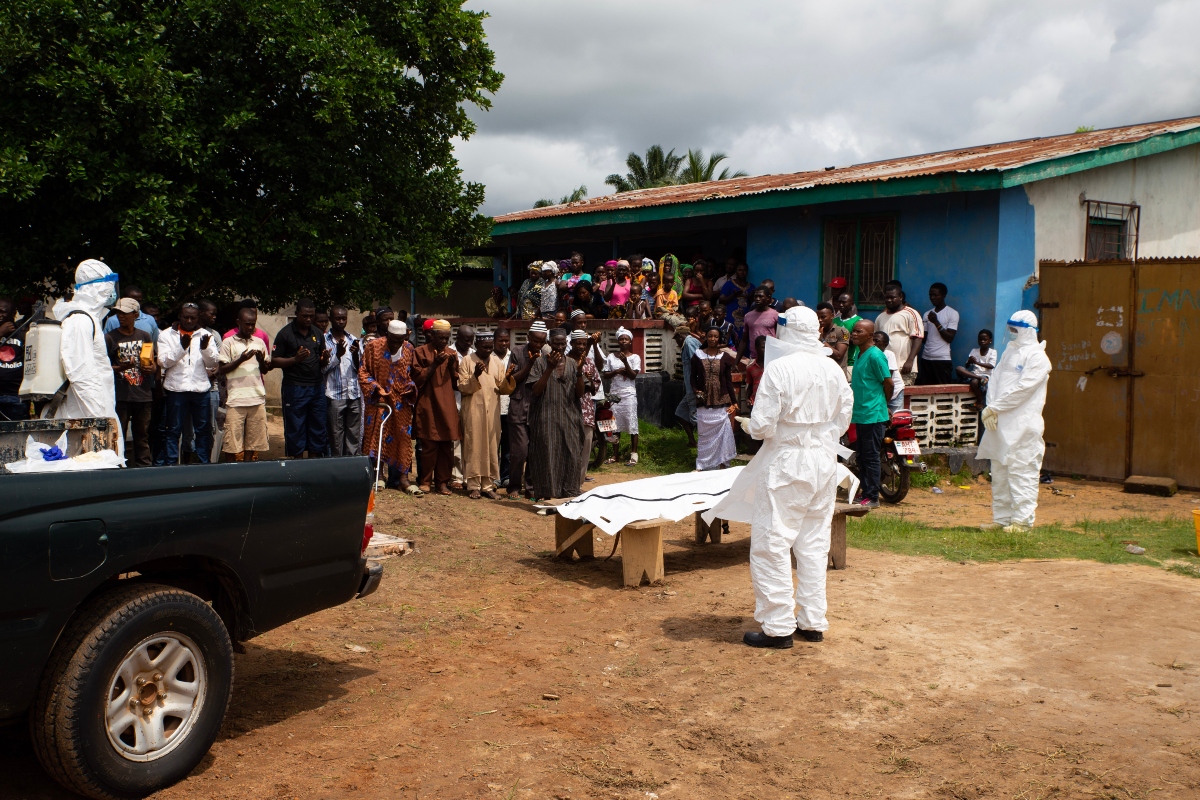
The WHO advised against closing borders with Congo, despite recognizing the high regional risk of infection.
The agency declared this outbreak a public health emergency of international concern.
According to the organization, border restrictions can cause people and goods to use informal routes without health controls.
The border between Uganda and Congo stretches for several hundred kilometers.
It also has numerous paths used daily by traders and families crossing between the two countries.
Congolese health authorities face difficulties containing the outbreak.
The WHO said the virus is spreading faster than response teams can control.
The rare Bundibugyo variant was identified weeks after the start of the outbreak because initial testing focused on a more common Ebola variant.
United States Strengthens Controls Over the Ebola Outbreak
WHO Director-General Tedros Adhanom Ghebreyesus called for a ceasefire in eastern Congo to facilitate the work of medical teams.
Tedros said attacks on health centers make case and contact tracing “practically impossible.”
Obstacles to controlling the epidemic also include armed groups, mass displacement of people, and weak health infrastructure.
Meanwhile, the United States is working to set up a center in Kenya for U.S. citizens exposed to or infected with Ebola.
CDC officials also confirmed that several Americans have been transferred to Germany and the Czech Republic for medical observation.
U.S. authorities strengthened entry controls for travelers coming from Congo, Uganda, and South Sudan.
Currently, people who have recently been in those countries may only enter the United States through specific airports in Houston, Washington, Atlanta, and soon New York.
Houston airport expects to screen up to 50 passengers daily under these reinforced controls.
In addition, lawful permanent residents and foreign nationals who have recently been in those countries are barred from entering the United States.
“We cannot and will not allow any Ebola case to enter the United States,” Secretary of State Marco Rubio said during a cabinet meeting with President Donald Trump at the White House.
¿Te gustó este artículo? ¡Compártelo!
¡No te pierdas las noticias!
Suscríbete y recibe lo más importante directamente en tu correo
Artículos relacionados
Recomendado por IAUganda: Alarman arrestos por ‘actos de homosexualidad’

¡Tragedia por lluvias! Deslave deja 15 muertos en Uganda

Ron DeSantis toma drástica decisión durante campaña

Israel Amplía Evacuaciones en Gaza Tras Ataque a Escuela

Grupo Bimbo toma drástica decisión tras conflicto entre Ucrania y Rusia

Comentarios 0
Sé el primero en comentar